Lion OTT IPTV Test: How to Test IPTV Service Before Buying
If you’ve ever signed up for an IPTV service that looked amazing on paper but disappointed in reality, you already know why testing matters. IPTV providers often promise everything—crystal-clear streams, thousands of channels, and zero buffering—but not all of them deliver the same experience when you actually start watching, which is why a Lion OTT IPTV test becomes essential.
That’s exactly why taking the time to test a service before committing is so important. When it comes to options like Lion OTT IPTV, the idea isn’t just to trust the name—it’s to verify the performance for yourself in real-world conditions through a proper Lion OTT IPTV test.
This guide walks you through everything you need to know, in a practical and realistic way, so you can make a confident decision without regrets by following a complete Lion OTT IPTV test approach and understanding how a Lion OTT IPTV test works in everyday use.
Why Testing IPTV Before Buying Matters
IPTV isn’t like traditional cable. The quality you get depends on several factors: server stability, internet speed, device compatibility, and even the time of day you’re watching.
Two providers can offer the same number of channels, but the actual viewing experience can be completely different. One might stream smoothly, while the other constantly buffers or crashes.
Testing helps you answer critical questions:
- Does the service actually work smoothly?
- Are the channels you want available?
- Is the quality consistent?
- Does it perform well during busy hours?
Skipping this step is where most people go wrong.
Step 1: Always Start With a Trial
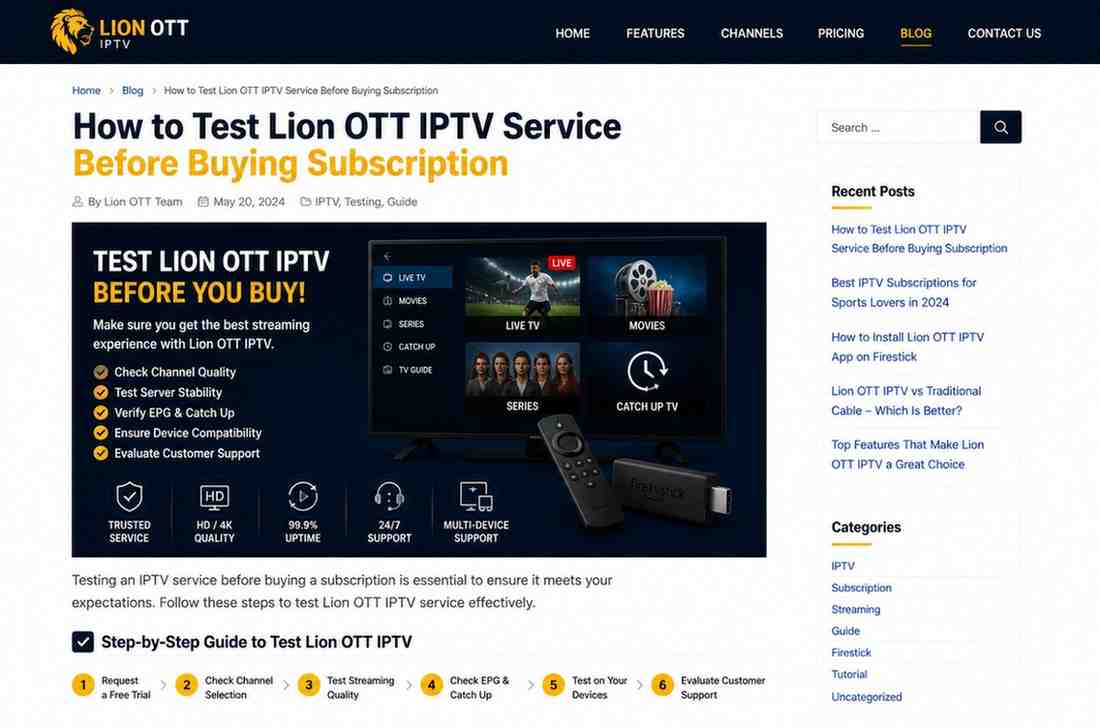
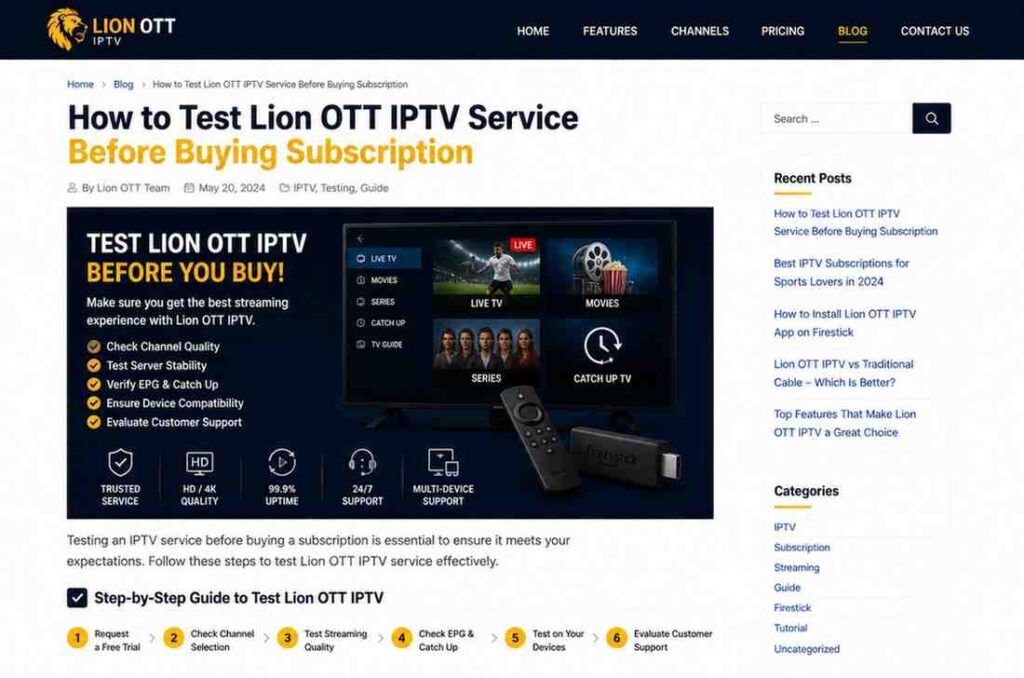
The first thing you should look for is a trial option. A good IPTV provider will usually offer a free or low-cost trial for at least 24 hours.
This is your opportunity to explore the service without risk.
During the trial, don’t just casually browse—use it like you would if you had already paid for it. Watch live TV, try different categories, and switch between channels.
If a provider doesn’t offer any kind of trial, that’s already a warning sign.
Step 2: Test Streaming Quality
Streaming quality is one of the biggest deciding factors.
While testing, pay attention to:
- Picture clarity (HD, Full HD, or 4K)
- Loading time when switching channels
- Any lag or buffering
- Audio sync issues
Try both high-demand content (like sports) and regular channels. Sports channels are especially useful for testing because they reveal buffering issues quickly.
A reliable IPTV service should provide smooth playback most of the time—not just occasionally.
Step 3: Check Performance During Peak Hours
A service might work perfectly in the afternoon but struggle at night.
Why? Because that’s when most users are online.
So make sure you test the service during:
- Evening hours
- Weekends
- Live events
If the service holds up during these times, it’s a strong indicator of good server performance.
Step 4: Explore Channel Availability
Don’t get distracted by large numbers like “10,000+ channels.”
Instead, focus on what actually matters to you.
Ask yourself:
- Are your favorite local channels included?
- Do you get access to sports, movies, or international content you want?
- Are channels organized properly?
Also, check if channels load quickly and consistently. A long list doesn’t mean much if half of them don’t work.
Step 5: Test Video-on-Demand (VOD) Content
Many IPTV services include movies and TV series in their packages.
While testing:
- Play different movies and shows
- Check loading speed
- Look for playback errors
A good VOD library should be easy to navigate and regularly updated.
Step 6: Try Different Devices
One of the advantages of IPTV is flexibility. You can watch on:
- Smart TVs
- Android devices
- iPhones
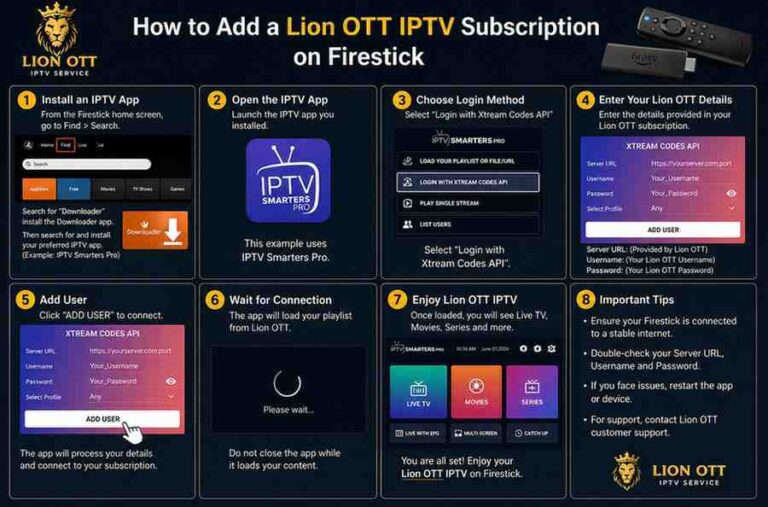
- Firestick
- PCs or laptops
Make sure the service works smoothly on the device you plan to use the most.
Also check:
- App stability
- Ease of navigation
- Login process
A service that works well on one device but struggles on another can be frustrating long-term.
Step 7: Evaluate User Interface
The interface might not seem important at first, but it plays a big role in your overall experience.
During testing, notice:
- How easy it is to find channels
- Whether categories are organized
- How quickly menus respond
A clean and simple interface saves time and makes daily use much more enjoyable.
Step 8: Test Customer Support
Customer support is often overlooked—but it matters more than people think.
Even good services can have occasional issues. When that happens, you want quick help.
During your trial:
- Send a question or request
- See how long they take to respond
- Check if the response is helpful or generic
Fast and clear support is a strong sign of a professional service.
Step 9: Check Internet Compatibility
Even the best IPTV service won’t perform well if your internet connection isn’t stable.
For smooth streaming, you generally need:
- At least 10 Mbps for HD
- 20+ Mbps for 4K
While testing, try using your normal internet setup. This gives you a realistic idea of what to expect after purchase.
Step 10: Look for Consistency, Not Perfection
No IPTV service is perfect 100% of the time.
The goal of testing isn’t to find zero issues—it’s to see how often problems occur.
Ask yourself:
- Is buffering rare or constant?
- Do channels usually work?
- Is the experience enjoyable overall?
Consistency is what matters most.
Common Mistakes to Avoid
Many users rush into buying IPTV subscriptions and regret it later. Here are some mistakes to avoid:
1. Choosing Based on Price Alone
Cheap services often compromise on quality.
2. Ignoring Trials
Skipping the trial phase removes your safety net.
3. Believing Marketing Claims
Always test instead of trusting promises.
4. Not Testing Enough Content
Check multiple channels and categories—not just one or two.
What Makes a Service Worth Buying?
After testing, a good IPTV service should offer:
- Stable streaming with minimal buffering
- Reliable access to your preferred channels
- Smooth performance across devices
- Responsive customer support
- Consistent quality during peak hours
If a service meets these criteria, it’s likely worth your investment.
Final Thoughts
Testing an IPTV service before buying isn’t just a recommendation—it’s a necessity.
It helps you avoid frustration, wasted money, and poor viewing experiences. Instead of relying on promises, you get to see exactly how the service performs in your daily usage.
When evaluating options like Lion OTT IPTV, the key is to focus on real performance: how it streams, how stable it is, and how well it fits your needs.
Take your time during the trial, test thoroughly, and pay attention to the details. A little effort upfront can save you from a lot of disappointment later.
In the end, the best IPTV service isn’t the one with the biggest claims—it’s the one that actually works when you need it.